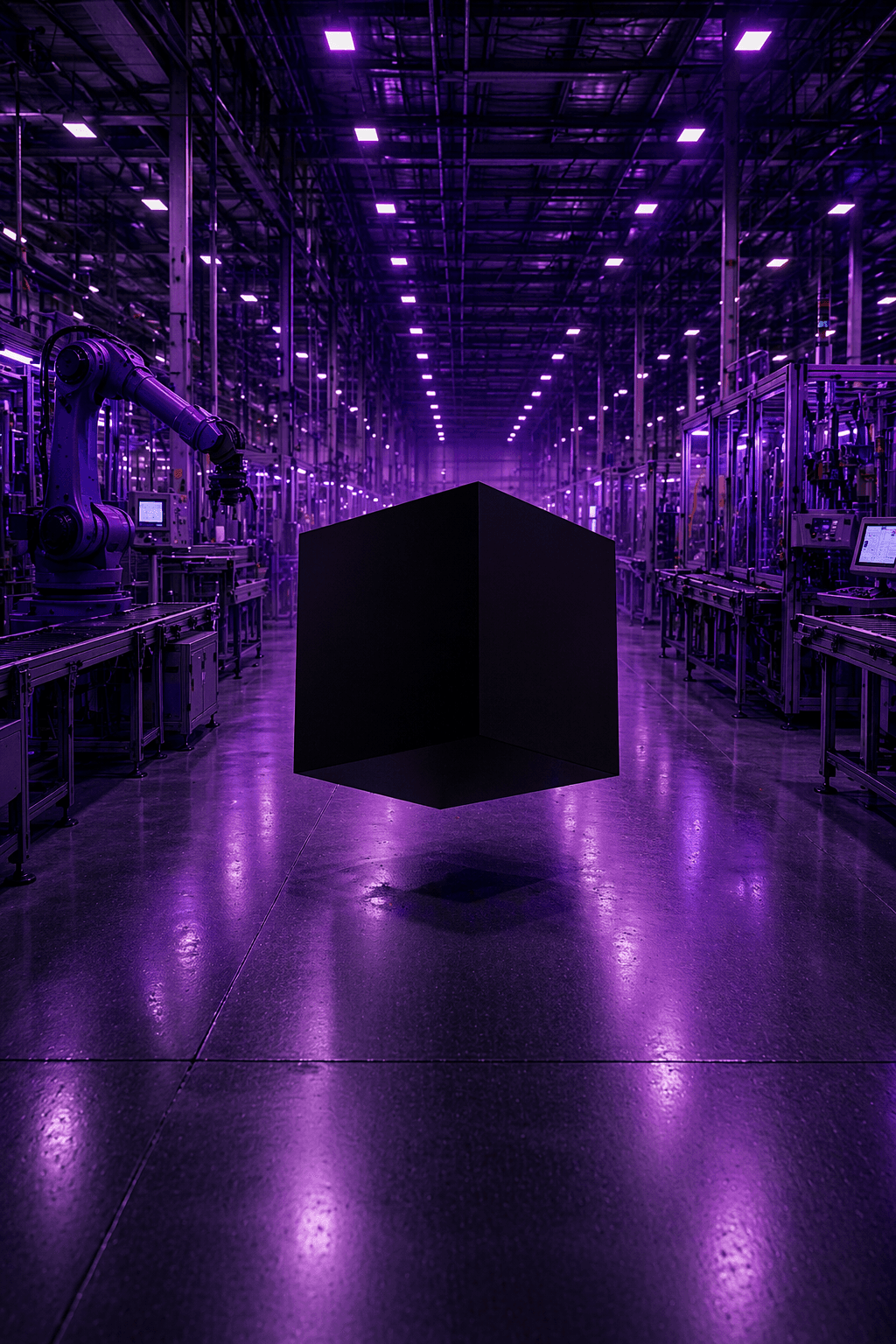
The AI Assurance Index (AIA Index) is the accountability layer for AI on the plant floor. It continuously measures whether your vision, predictive maintenance, quality, and process-control models are still performing inside the standards your operations, your safety program, and your customers require, and produces the auditable record to prove it.
Most manufacturers deploy AI into vision inspection, predictive maintenance, yield optimization, or process control, and move on. No baseline. No ongoing measurement. No way to know whether the model that passed validation at install is still performing inside spec after a season change, a sensor swap, or a raw material substitution.
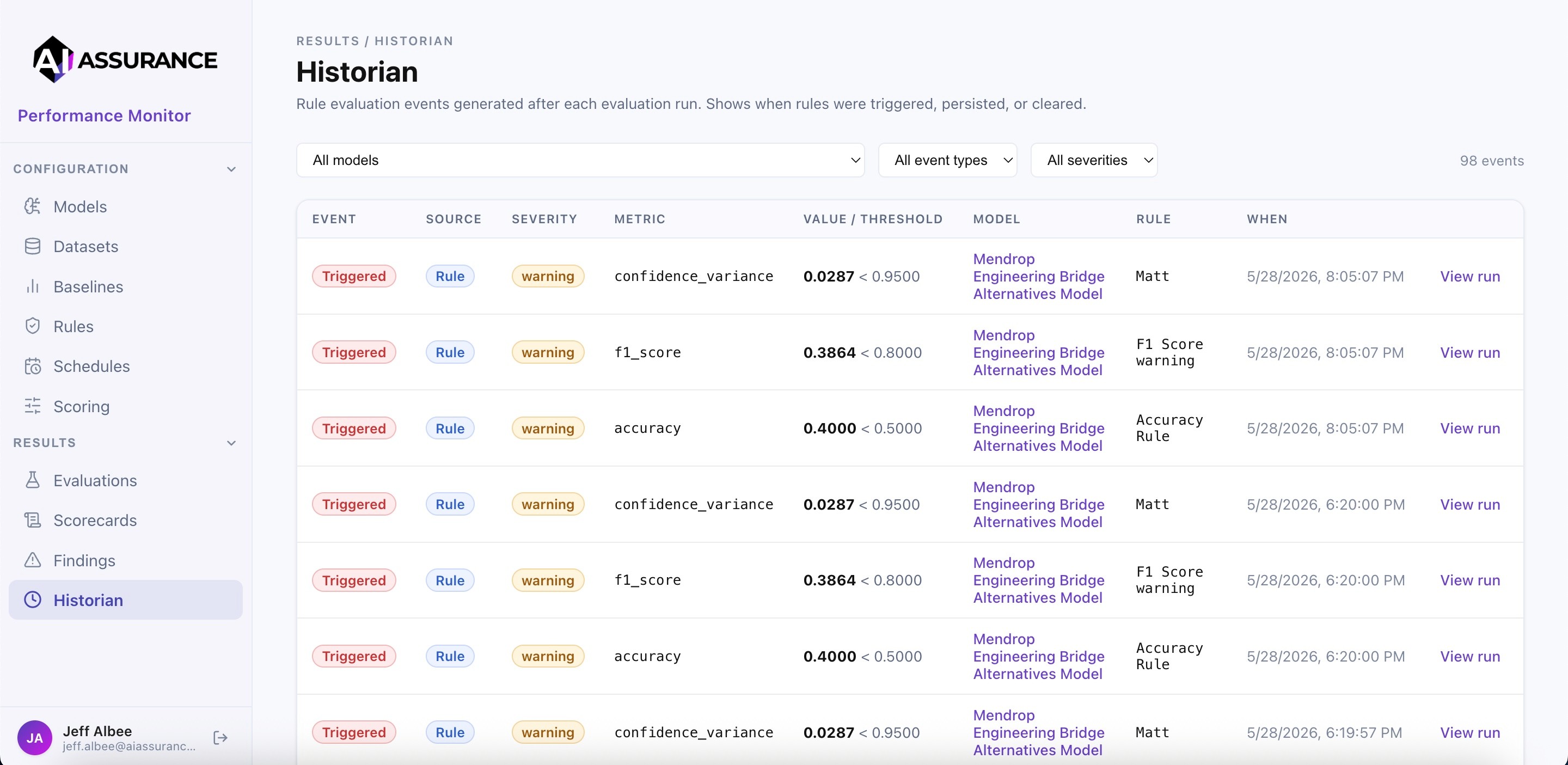
In a production environment, that gap is not a model problem. It is scrap, warranty exposure, recall risk, missed regulatory commitments or worker and consumer safety risk. Models drift. Sensors age. Inputs shift with shift changes, suppliers change, and seasons vary. Confidence erodes silently, between audits, while parts are still moving down the line.
By the time the defect ships the damage is done.


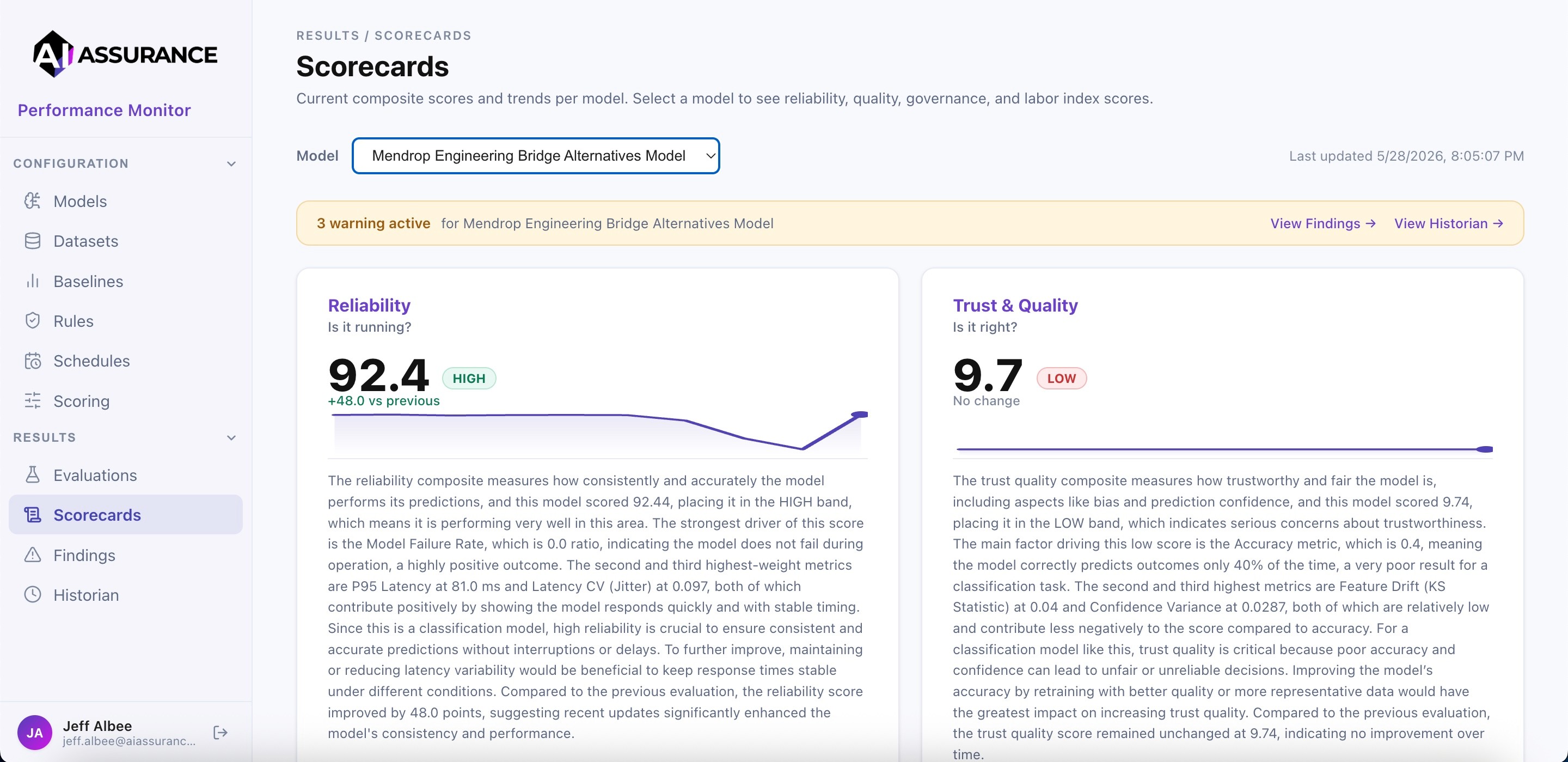
Single metrics lie by omission. A vision model can show acceptable accuracy while its lighting conditions are drifting, its confidence is degrading on a specific defect class, and its false-pass rate is creeping up on a high-value part. Each metric looks passable in isolation. Together, they tell a different story, and that story is the one that shows up in a warranty claim six months later.
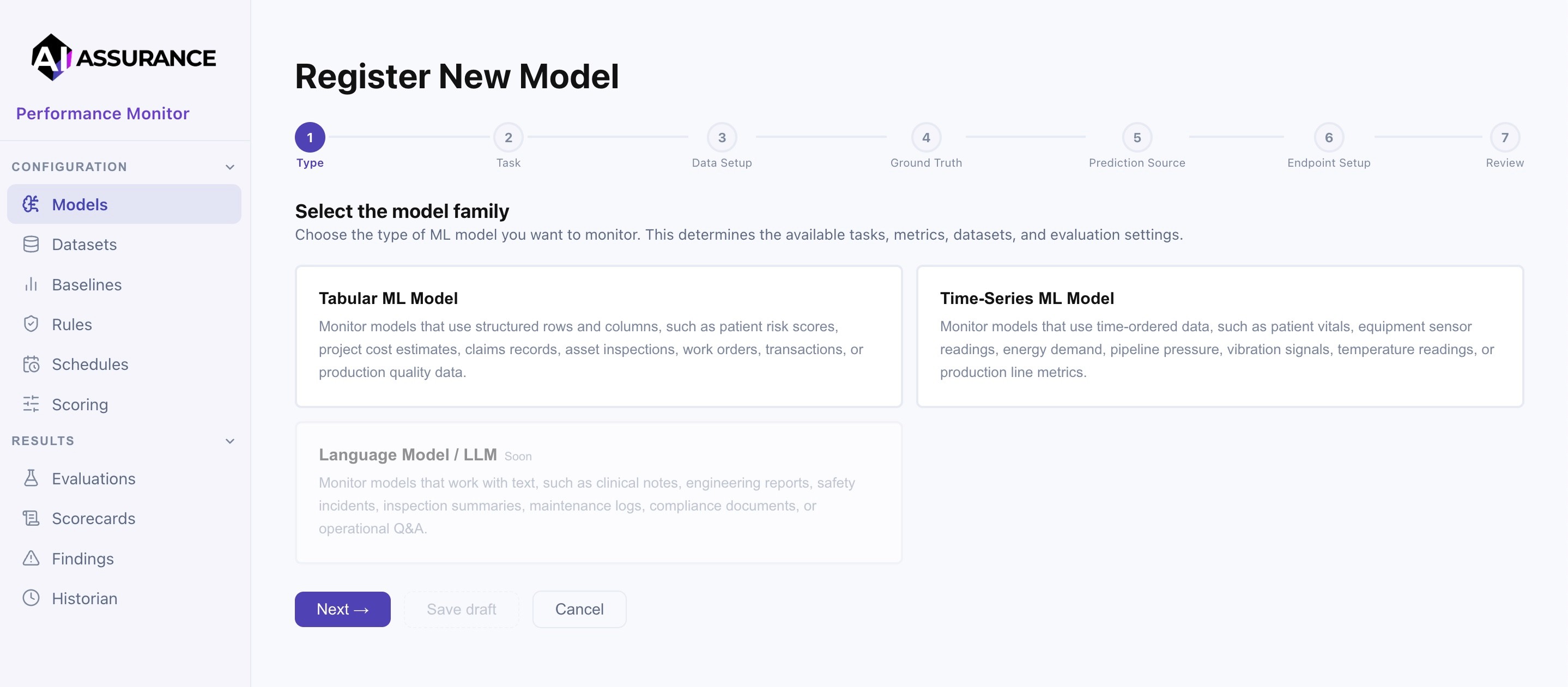
The AIA Index aggregates more than thirty underlying measurements into four composite scores, Reliability, Trust, Governance, and Value, calibrated to your industry, your part mix, and your operating environment. The result is not a point measurement. It is a running narrative of whether your AI is stable, whether it is drifting, and whether it is operating inside your defined standard of care over time.
When a score moves out of tolerance, the AIA Index doesn't just flag it. The built-in model-repair suggestion engine triages the deviation, points to the likely cause, whether it is sensor drift, input distribution shift, environmental change, or a degraded confidence pattern, and recommends the corrective action. Your team responds with a defined next step, not a debugging exercise on the plant floor.
The most sensitive data in your operation, recipes, process parameters, defect libraries, machine telemetry, customer-specific tolerances, is also the data your AI depends on. Sending it to a third-party monitoring cloud is a security, sovereignty, and IP problem, and in many OT environments, it isn't permitted at all.
The AIA Index is built to run where your AI runs. On-premises. Inside the plant network. In air-gapped and segmented OT environments aligned with IEC 62443 and the Purdue Model, where data cannot cross the boundary. The same platform is available as a managed cloud service when corporate AI deployments fit that posture, but the default is that your production data stays inside your plant.
Quality & Operations: When a vision model passes a defective part or a predictive maintenance model misses a failure mode, the quality and operations leaders carry the consequence. The AIA Index gives you your own performance record, independent of the vendor that built the model.
EHS & Safety: AI is increasingly embedded in safety-adjacent decisions, lockout signaling, anomaly detection, ergonomic monitoring, and process control. The AIA Index produces the documented performance evidence your safety program needs to defend those systems to OSHA, internal review, and corporate risk.
Regulated Manufacturing (Medical Device, Food, Pharma, Aerospace, Automotive): FDA, FSMA, AS9100, IATF 16949, and customer-specific quality requirements are moving toward documented AI oversight. The AIA Index produces the auditable evidence your compliance program requires before the audit, the recall, or the customer escape.
Plant IT & OT Security: AI models running near or inside control systems demand the same change control, integrity monitoring, and documented oversight as any other production-critical system. The AIA Index provides that oversight without forcing data out of the OT environment.
The AI monitoring market is built for engineering teams, tracing calls, logging tokens, measuring API latency. Those tools tell developers what the system is doing. They were not built for a quality director, a plant manager, or an EHS lead.
The AIA Index tells plant leadership, quality, and corporate operations whether the AI is still doing what the production line needs it to do, and gives them the documented proof to defend that answer in front of a customer auditor, a regulator, or a plaintiff's attorney. That distinction is the product.
BThe AIA Index is in active deployment with early adopter clients across industrial and regulated manufacturing.
Early adopters receive direct access to our technical and advisory team, priority onboarding, preferred pricing on the annual subscription, and meaningful input into the platform roadmap.